8/27/17
We headed out toward Portland in the morning, opting for the somewhat more scenic route down the coast. Down the coast, in this case, meant highway between small towns instead of freeway. For the most part, I didn’t feel like it was “on the ocean” – not like California where you’re driving on the ocean for 10’s of miles. Looking at the map, and the timing of when we would have been driving past, I guess this impression could have been influenced by the fact that most of the run down the coast was after sunset.
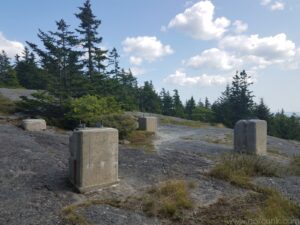
The first stop along the way was at Blue Hill Mountain – only about 45 minutes out of Acadia. I’m not sure what the claim to fame of the place was, but it came up in Janet’s search for hikes so we diverted a bit. It was a pretty, and pretty easy hike up through the woods to a peak. There was formerly a tower there, but just the footings remain at this point.
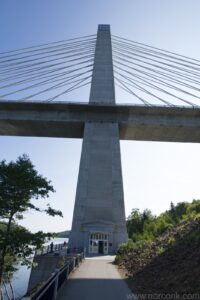
The second stop was at the Penobscot Narrows Bridge & Observatory and Historic Fort Knox only about 25 minutes further. I’m not sure we had a plan to stop there, but it’s the tallest bridge observatory in the world, so it seemed a shame not to. Plus, we didn’t have a specific arrival time in Freeport so why not? We did the observatory and then spent a good portion of the evening wandering the fort before continuing on our way toward Portland.
We got to Freeport after dark and took a quick hop downtown for no particular reason, ordered a pizza for dinner and went to bed.

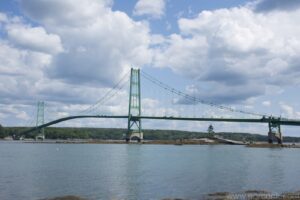
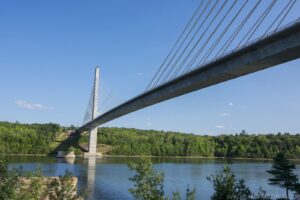
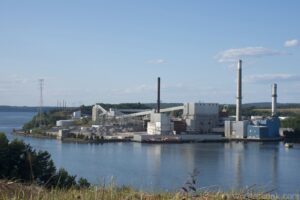
I don't know anything about this bridge other than we drove over it and pulled off to take a look.

The footings of the former tower that we were hiking to.

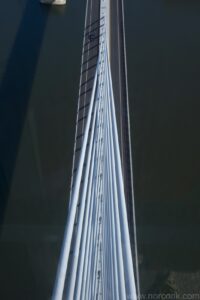
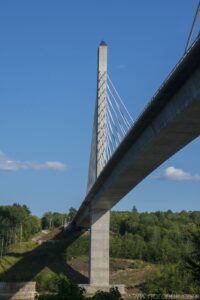
Penobscot Narrows Bridge; 2,120 feet long cable-stayed bridge that crosses over the Penobscot River

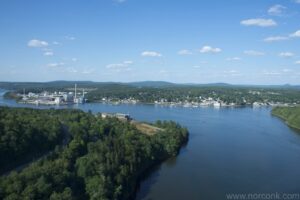
Historic Fort Knox and beyond from the Penobscot Narrows Bridge. Pleasantly inexpensive at only $6 combined entry fee for adults for the observation tower and Fort Knox.

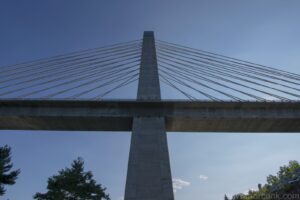
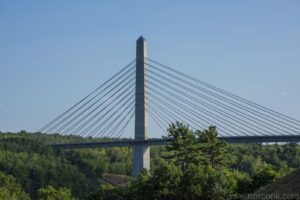
Penobscot Narrows Bridge; Also home to the Penobscot Narrows Observatory, the first bridge observation tower in the United States and the tallest public bridge observatory in the world. The tower reaches 420 feet into the air.

Penobscot Narrows Bridge; According to wikipedia, the elevator system in the tower is claimed to be the fastest and tallest elevator in Maine.

The view across the river from the fort

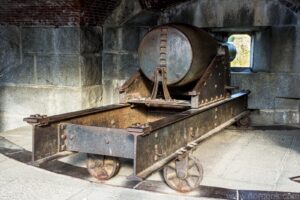
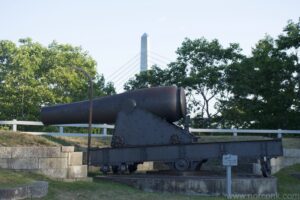
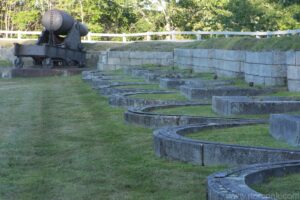
A cannon in Historic Fort Knox. These “giant shot-guns” were called flank howitzers. The metal rails you see on the floor are called traverse rails…when aiming the guns they could be rolled left or right along these rails.

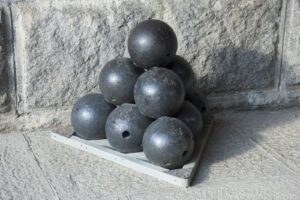
Cannonball stack. According to the website; Solid shot weighed about 133 pounds. Exploding shells weighed less, around 100 pounds. These are actual shells (NOT loaded with explosives).

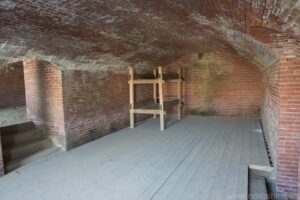
One of the barracks rooms in the fort

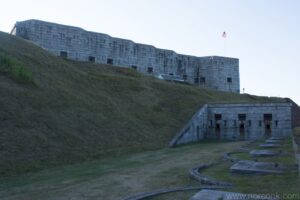
Fort Knox was established in 1844 to protect the Penobscot River valley against a possible future British naval incursion. The Fort was named for Major General Henry Knox, America's first Secretary of War, who was born in Boston but retired to Thomaston, Maine in 1796.

I think this was from the 3rd or 4th level of the fort